Critical Fortinet FortiWeb Zero-Day Vulnerability

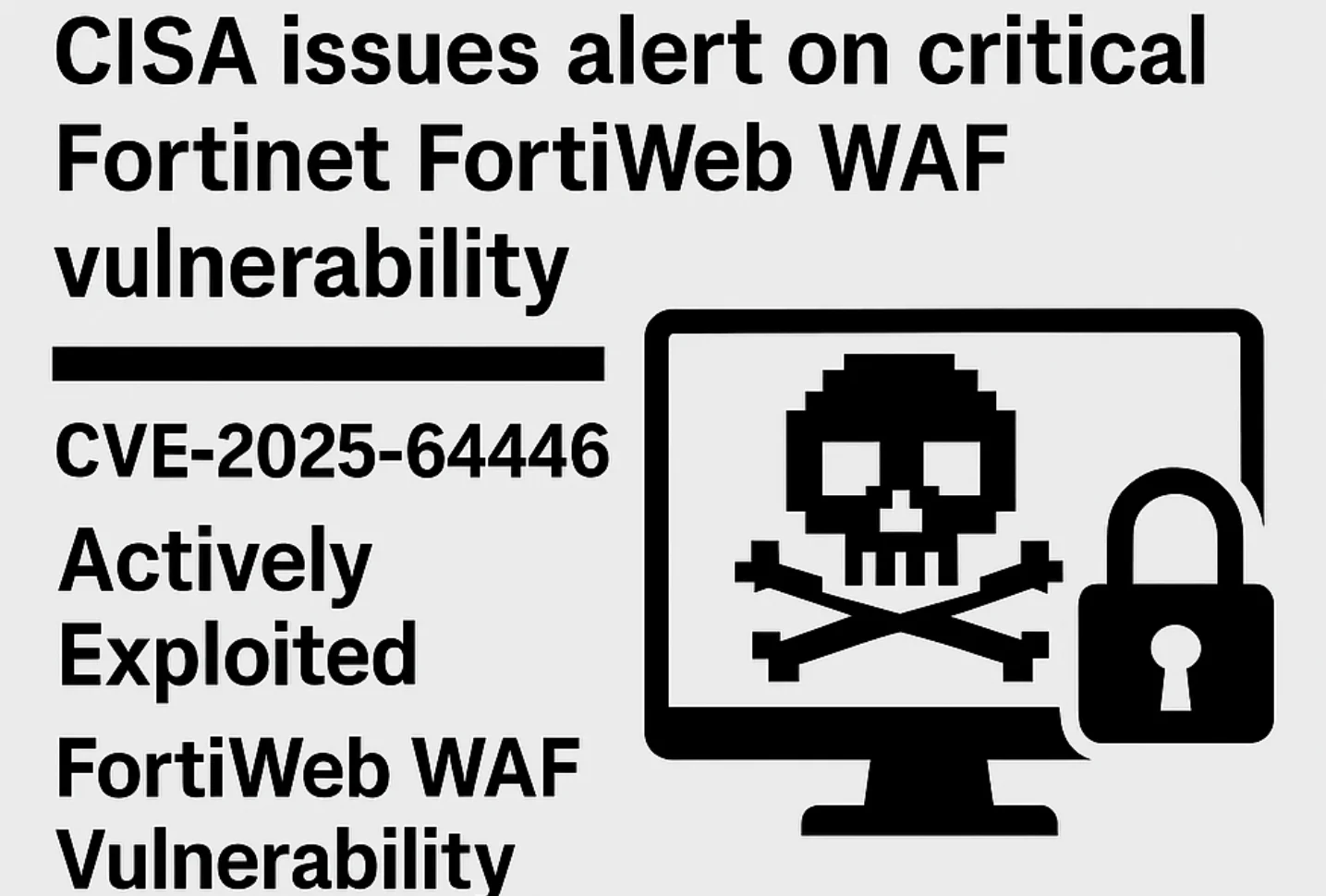
Fortinet has confirmed a critical zero-day vulnerability in its FortiWeb Web Application Firewall (WAF) that has been actively exploited in the wild for several weeks before public disclosure. Tracked as CVE-2025-64446 with a maximum severity score of 9.8 out of 10, this relative path traversal vulnerability allows completely unauthenticated attackers to execute arbitrary administrative commands on vulnerable systems.

Read More
Lazarus Group

North Korean Lazarus Group Exploits JSON Storage Services to Deploy Advanced Malware

In a sophisticated evolution of supply chain attacks, North Korean state-sponsored threat actors affiliated with the notorious Lazarus Group have weaponized legitimate JSON storage services to host and distribute advanced malware. This alarming campaign, dubbed “Contagious Interview,” specifically targets software developers through social engineering tactics on professional networking platforms, particularly LinkedIn.

Read More
WAF vulnerability

Critical FortiWeb WAF Vulnerability: Active Exploitation and Mitigation Strategies

The U.S. Cybersecurity and Infrastructure Security Agency (CISA) has issued an urgent security advisory regarding a critical vulnerability in Fortinet’s FortiWeb Web Application Firewall platform. Designated as CVE-2025-64446 with active exploitation confirmed in production environments, this security flaw presents an immediate and significant risk to organizations relying on FortiWeb for perimeter defense and application security.

Read More
vulnerability

pgAdmin4 Remote Code Execution Vulnerability: Critical Flaw in PostgreSQL Management Interface

A critical remote code execution vulnerability has been identified in pgAdmin4, the widely-deployed open-source administration platform for PostgreSQL database systems. Designated as CVE-2025-12762, this security flaw affects all versions through 9.9 and enables authenticated attackers to execute arbitrary commands on the underlying server infrastructure. With a CVSS score of 9.3, this vulnerability poses an immediate threat to enterprise database environments worldwide.

Read More
SVG security

Turning Innocent-Looking SVGs into Phishing Lures

Traditional phishing attachments (macro-docs, PDFs) are losing traction. Attackers are pivoting to a lesser-suspected vector: SVG vector files, which look like harmless graphics yet contain interactive, script-enabled code. According to recent research by Hoxhunt, SVG attachments were nearly negligible in 2024 (~0.1 % of attacks) but ballooned to 4.9 % of phishing lures in just the first half of 2025 — and peaked near 15 % in March 2025.
Why does this matter? Because SVGs combine trust (image format) + capability (XML, scripting, external references) — making them ideal for stealthy, high-impact phishing.

Read More